BORIS ANDREWS
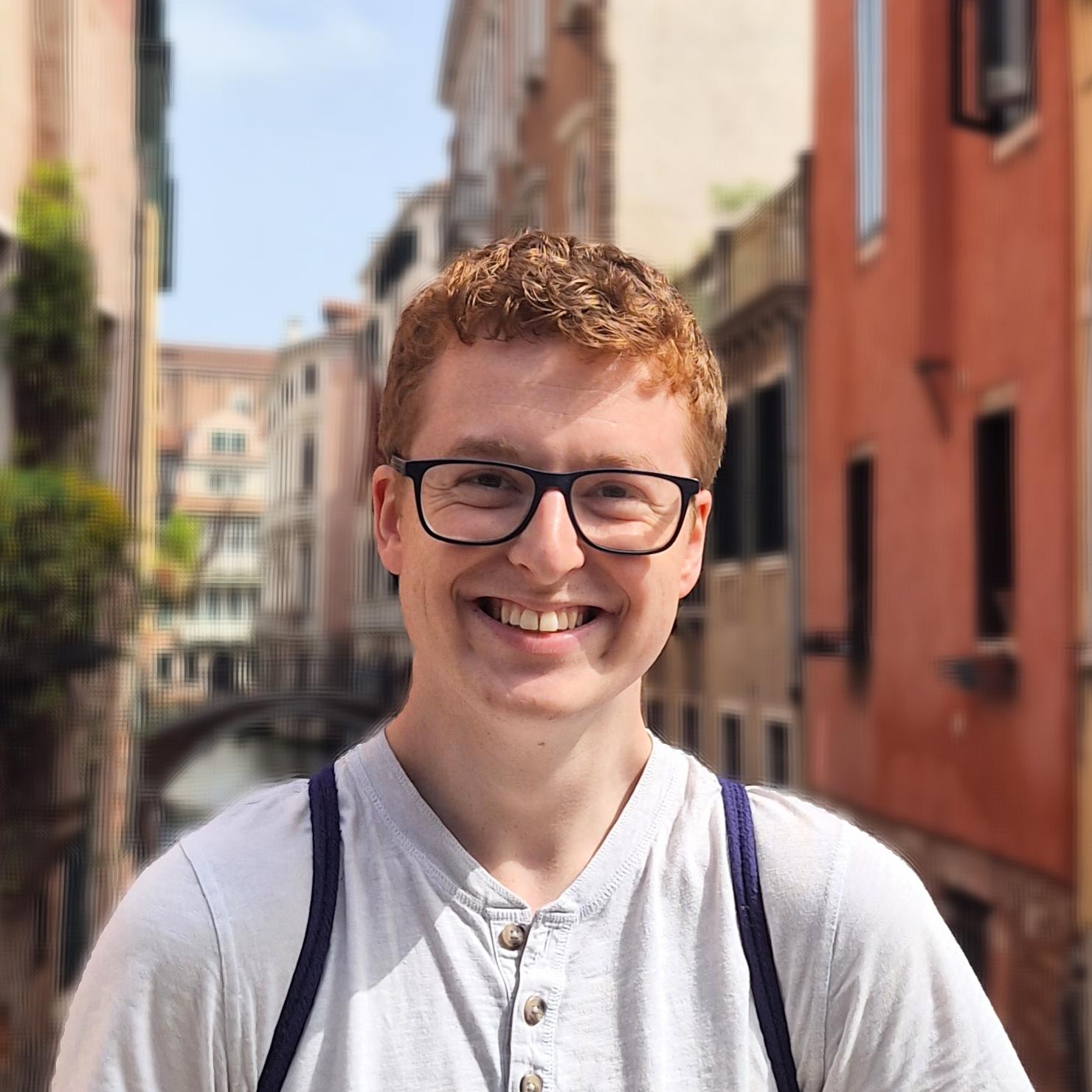
Postdoctoral Research Associate, University of Oxford (he / him)
AUTOMATED GALERKIN TIME STEPPING IN IRKSOME
Boris Andrews | Pablo Brubeck | Patrick Farrell | Rob Kirby | Scott MacLachlan
JUN.2026 (arXiv) | In review
[…] we present automation in Irksome for both discontinuous Galerkin and continuous Petrov–Galerkin time stepping of semidiscrete variational problems. The implementation supports auxiliary variables, flexible temporal quadrature, and monolithic algebraic solvers, and it enables switching between Runge–Kutta and Galerkin-in-time formulations with minimal changes to user code. […]
In this work, we present automation in Irksome for both discontinuous Galerkin and continuous Petrov–Galerkin time stepping of semidiscrete variational problems. The implementation supports auxiliary variables, flexible temporal quadrature, and monolithic algebraic solvers, and it enables switching between Runge–Kutta and Galerkin-in-time formulations with minimal changes to user code. Numerical examples illustrate accuracy, solver performance, and structure preservation across representative PDE systems.
Irksome is a time-stepping library for Firedrake. Its core design principle is that the user supplies only a semidiscrete variational form; Irksome then handles the time discretisation automatically via manipulation of the Unified Form Language (UFL). The original Irksome papers showed how to automate a broad class of Runge–Kutta (RK) methods at this abstract level, requiring essentially no changes to user code.
This paper extends that abstraction to Galerkin-in-time discretisations: both discontinuous Galerkin (DG) and continuous Petrov–Galerkin (CPG) in time. Switching between RK, DG and CPG typically requires changing only a single line of code.
Why Galerkin-in-time?
RK methods face fundamental barriers in structure preservation: they generally cannot conserve non-quadratic invariants or preserve non-quadratic dissipation inequalities. DG and CPG in general methods do not have these limitations. In particular, CPG with suitably chosen auxiliary variables can preserve multiple conservation and dissipation laws simultaneously (the approach taken in my earlier work with Patrick Farrell). General-purpose implementations of DG and CPG time stepping have not previously existed; this work fills that gap within the Firedrake ecosystem.
TALKS
2026
- Firedrake User Meeting, University of Oxford
CO-AUTHORS
Pablo Brubeck
- Affiliation
|University of Oxford - Joint publications
|Automated Galerkin time stepping in Irksome
Patrick Farrell
- Affiliation
|University of Oxford / Charles University - Joint publications
|Helicity-preserving finite element discretization for magnetic relaxation / Enforcing conservation laws and dissipation inequalities numerically via auxiliary variables / Conservative and dissipative discretisations of multi-conservative ODEs and GENERIC systems / Arbitrary-order structure-preserving discretizations for geometric curvature flows / Automated Galerkin time stepping in Irksome / Strongly enstrophy-stable integrators for the incompressible Navier–Stokes equations / Energy-stable discretisations of viscoelastic flows* / Energy- and entropy-stable discretisations for the quasi-incompressible Maxwell–Stefan equations*
Rob Kirby
- Affiliation
|Baylor University - Joint publications
|Automated Galerkin time stepping in Irksome
Scott MacLachlan
- Affiliation
|Memorial University of Newfoundland - Joint publications
|Automated Galerkin time stepping in Irksome